The End of Plastic: How Smart Money Moves in 2026

For decades, money lived in your pocket.

Cash in one section.
Plastic cards in another.
Receipts folded and forgotten.

Your wallet was physical, bulky, and predictable.

But by 2026, that wallet has quietly disappeared.

Not overnight.
Not with announcements.
But through habit.

You stopped reaching for plastic.
You stopped thinking about cards.
You stopped worrying about limits and due dates the same way.

Money started moving on its own—smarter, faster, and with far less friction.

This is the real story behind the end of plastic and how smart money moves in 2026. Not futuristic hype. Not tech jargon. Just how everyday personal finance actually works now—and how to make sure it works for you.


Plastic Didn’t Fail — It Became Obsolete

Plastic cards didn’t die because they were bad.

They died because the world changed.

Plastic was designed for a time when:

  • Payments were slow
  • Credit decisions were manual
  • Fraud detection was reactive
  • Rewards were generic
  • Financial data was limited

None of that is true anymore.

In 2026, money moves at the speed of data. Plastic simply can’t keep up.


What “The End of Plastic” Really Means

Let’s be clear.

The end of plastic does not mean:

  • Credit cards vanished
  • Banks disappeared
  • Payments became risky

It means:

  • Physical cards are no longer central
  • Intelligence replaced plastic
  • Decisions moved from humans to systems

Your “card” still exists—but it lives in software, not your pocket.


The Rise of Smart Money

Smart money is not about being rich.

It’s about money that:

  • Understands context
  • Responds in real time
  • Adapts to behavior
  • Minimizes cost
  • Maximizes value

In 2026, smart money moves automatically—guided by AI, real-time credit systems, and intelligent wallets.


What Is a Smart Wallet in 2026?

A smart wallet is not just a payment app.

It is a financial control center that connects:

  • Bank accounts
  • Credit lines
  • Reward systems
  • Installment options
  • Subscriptions
  • Risk controls

Instead of asking,
“How should I pay?”

The wallet answers it for you.


How Money Actually Moves in 2026

Here’s what happens when you make a payment today.

Before you even confirm, your wallet evaluates:

  • Your available cash
  • Upcoming bills
  • Credit usage
  • Reward opportunities
  • Merchant offers
  • Risk indicators

Then it chooses:

  • The best payment source
  • The best credit option (if needed)
  • The lowest-cost structure
  • The highest reward value

You see one tap.

Behind that tap is intelligence.


Fixed Credit Limits Are a Thing of the Past

One of the biggest changes is the disappearance of fixed credit limits.

In 2026:

  • Credit adjusts dynamically
  • Limits expand with stability
  • Exposure shrinks with risk
  • Borrowing becomes contextual

This is called smart credit.

It protects people from debt traps without removing flexibility.


Why Smart Credit Is Better for Real Life

Life isn’t monthly.

Expenses don’t wait for billing cycles. Income doesn’t always arrive on the same date. Emergencies don’t care about limits.

Smart credit works because it:

  • Tracks cash flow in real time
  • Responds to short-term changes
  • Adjusts without paperwork
  • Rewards responsible behavior instantly

This is especially powerful for:

  • Freelancers
  • Gig workers
  • Small business owners
  • Families with variable expenses

Plastic vs Smart Money: A Simple Comparison

Plastic Cards

  • Static limits
  • Monthly statements
  • Manual tracking
  • Reactive fraud control

Smart Money Systems

  • Dynamic credit
  • Real-time insights
  • Automated optimization
  • Preventive security

Once you experience the second, the first feels outdated.


Rewards No Longer Depend on Cards

In the plastic era, rewards depended on:

  • Which card you used
  • Whether you remembered categories
  • Whether you redeemed correctly

In 2026, rewards depend on behavior.

Smart wallets:

  • Analyze where you spend
  • Predict future spending
  • Negotiate merchant incentives
  • Apply rewards automatically

You don’t “earn points and hope.”

You receive value instantly.


Cashback, Points, or Nothing? The Wallet Decides

For one purchase, your wallet may:

  • Use cashback
  • Apply points
  • Split payments
  • Defer credit
  • Use zero-interest options

You didn’t choose this.

The system did—based on math, not emotion.


The Disappearance of the Physical Swipe

Most payments now happen through:

  • Device authentication
  • Biometrics
  • Tokenized credentials
  • Embedded checkout systems

The swipe, tap, and insert were stepping stones.

The future is invisible.


Security Without Plastic Is Actually Stronger

Many people fear:
“No card means less security.”

The opposite is true.

Smart money systems use:

  • Behavioral biometrics
  • Device trust scoring
  • Location consistency
  • Transaction pattern analysis
  • AI fraud detection

If something feels wrong, the system stops the transaction instantly.

Plastic cards usually react after fraud happens.


How Smart Money Protects You From Yourself

This part is uncomfortable—but important.

Humans:

  • Overspend emotionally
  • Forget due dates
  • Ignore reward caps
  • Make impulse purchases

Smart wallets counter this by:

  • Sending spending nudges
  • Predicting cash shortfalls
  • Warning before risky purchases
  • Suggesting better timing

This isn’t control.

It’s correction.


Are We Losing Control Over Our Money?

Only if we stop paying attention.

Smart money systems work best when:

  • Users set boundaries
  • Alerts stay enabled
  • Decisions remain transparent
  • Manual overrides exist

The system should guide—not dominate.


Privacy in a Post-Plastic World

Smart money needs data.

That’s the trade-off.

But in 2026, stronger regulations ensure:

  • Consent-based data usage
  • Limited data retention
  • Encryption standards
  • Explainable decisions

Users gain efficiency—but must remain informed.


What Happened to Banks?

Banks didn’t disappear.

They moved backstage.

Banks now:

  • Provide regulated capital
  • Manage risk models
  • Power credit infrastructure
  • Compete on pricing

Smart wallets sit on top of banks, not instead of them.


Who Benefits the Most From the End of Plastic?

  • Salaried professionals
  • Online shoppers
  • Families managing expenses
  • Travelers
  • Freelancers
  • First-time credit users

If you spend money, you benefit from smarter movement.


Who Should Be Cautious?

  • People carrying high-interest debt
  • Users who disable alerts
  • Anyone ignoring spending insights
  • Those uncomfortable reviewing finances

Technology amplifies habits.

Good habits win.


How to Adapt to Smart Money in 2026

You don’t need advanced knowledge.

Just awareness.

  1. Review wallet insights monthly
  2. Keep spending limits active
  3. Read permissions carefully
  4. Understand credit usage
  5. Don’t ignore warnings

Smart money helps—but it doesn’t replace responsibility.


The Bigger Shift: Money Becomes Invisible

The real change isn’t cards disappearing.

It’s money becoming less stressful.

  • Fewer mistakes
  • Fewer fees
  • Better rewards
  • Faster decisions

When money moves intelligently, life feels lighter.


Final Thoughts: Plastic Is Ending, But Control Is Not

Plastic cards are fading—but personal control doesn’t have to.

Smart money in 2026:

  • Reduces friction
  • Improves safety
  • Increases value
  • Adapts to real life

The key is balance.

Let systems handle complexity.
Let humans set direction.

That’s how smart money truly moves.


Frequently Asked Questions (FAQs)

1. Are physical credit cards completely gone in 2026?

No, but they are mostly backups rather than daily tools.

2. Is smart money safe?

Yes, when provided by regulated institutions with strong security.

3. Can smart wallets overspend for me?

No. You control limits, permissions, and alerts.

4. Do I still need to track spending?

Yes. Smart tools work best with human awareness.

5. Are rewards better in smart wallets?

Usually yes, because rewards are optimized automatically.

6. Is my data protected?

Reputed platforms follow strict data protection and consent laws.

7. Can beginners use smart wallets?

Yes. They often reduce beginner mistakes.


Disclaimer

This article is for educational purposes only and does not constitute financial advice. Always read official terms and consult financial professionals when necessary.
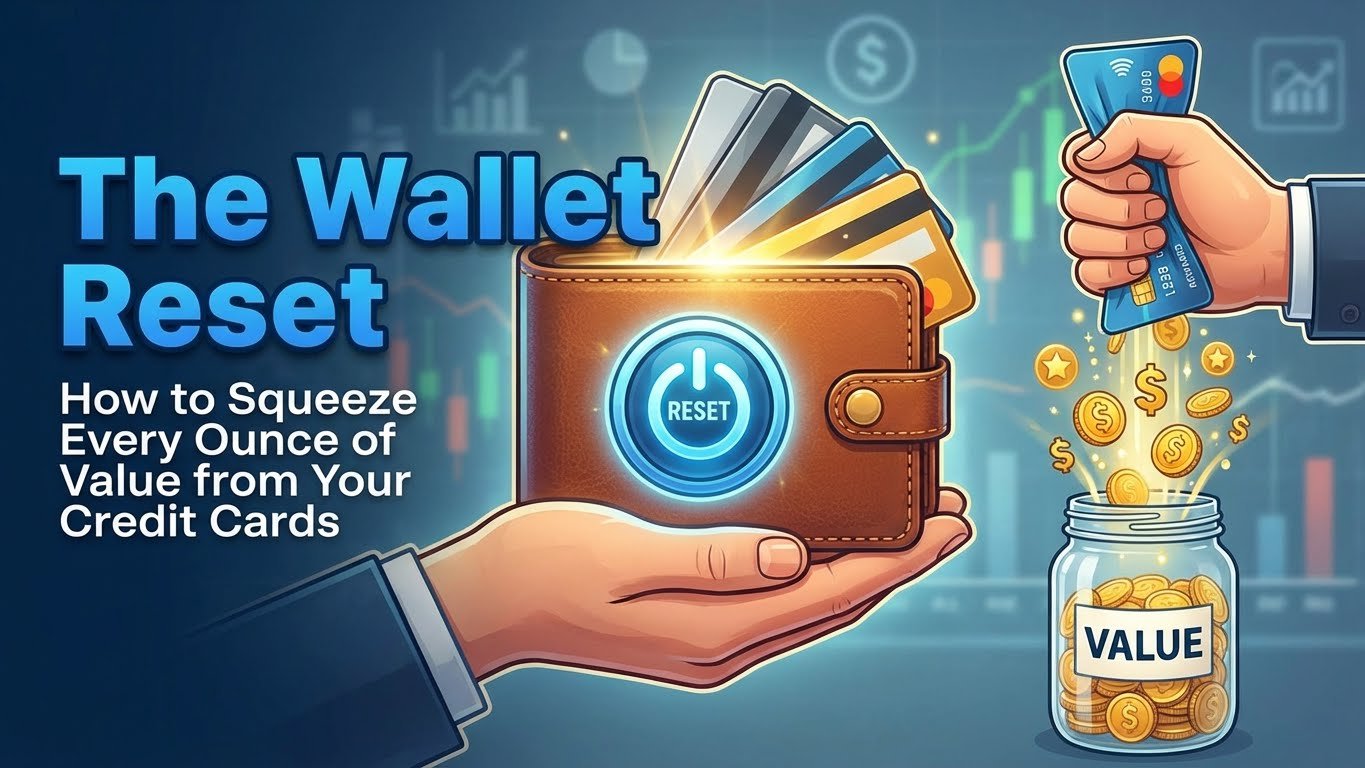
The Wallet Reset: How to Squeeze Every Ounce of Value from Your Credit Cards

For most people, a wallet never gets a reset.

Cards pile up. Old habits stay. New offers are ignored. Rewards expire quietly. Annual fees get charged without question. And every month, money slips through the cracks—not because of bad intentions, but because of lazy systems.

I know this because I lived it.

I used my credit cards regularly, paid my bills on time, and assumed I was doing fine. But when I finally did a full wallet reset, I realized how much value I was wasting every single year.

Not overspending.
Not paying interest.
Just not optimizing.

This article is about resetting your wallet—step by step—and learning how to squeeze every ounce of value from your credit cards without changing your lifestyle or taking financial risks.


What Is a “Wallet Reset”?

A wallet reset is not about closing all your cards or opening new ones blindly.

It is a structured process where you:

  • Review every card you own
  • Re-evaluate your spending habits
  • Reassign each card a clear role
  • Eliminate waste
  • Maximize rewards, cashback, and benefits

Think of it as decluttering your finances.

The goal is simple:
👉 Get more value from the same spending


Why Most People Leave Money on the Table

Credit card companies make billions because most users:

  • Use one card for everything
  • Ignore reward caps
  • Forget bonus categories
  • Miss welcome benefits
  • Redeem points poorly
  • Pay fees without extracting value

None of this requires bad money habits.

It only requires inattention.


Step 1: Lay Every Card on the Table

The wallet reset starts with honesty.

Take out:

  • All credit cards
  • Digital cards in apps
  • BNPL accounts that act like credit

For each card, write down:

  • Annual fee
  • Reward structure
  • Cashback rate
  • Point value
  • Key benefits
  • Renewal perks
  • Expiry of rewards

Most people have never done this.

That alone is the problem.


Step 2: Understand Your Real Spending Pattern

Rewards don’t matter unless they match spending.

Track the last 3–6 months of expenses and group them into:

  • Groceries
  • Fuel
  • Online shopping
  • Travel
  • Dining
  • Utilities
  • Subscriptions
  • Miscellaneous

Now ask:
Where does most of my money actually go?

This is where reality often surprises people.


Step 3: Assign One Clear Job to Each Card

A powerful wallet is role-based, not random.

Each card should have one main purpose.

Examples:

  • Card A → groceries & daily spending
  • Card B → online shopping & subscriptions
  • Card C → travel & hotels
  • Card D → backup / emergency

If two cards do the same job, one is usually unnecessary.


Step 4: Stop Using the Wrong Card for Convenience

Convenience is expensive.

Using one card everywhere feels easy—but it costs you:

  • Cashback
  • Reward multipliers
  • Category bonuses

A wallet reset means building a new habit:
👉 Pause for one second before paying.

That one second is where value is created.


Step 5: Calculate the True Value of Each Credit Card

A card is not good or bad by reputation.

It is good or bad for you.

Simple Value Formula

Annual value =

  • Cashback earned
  • Rewards redeemed
  • Benefits used
  • Fee waivers
  • Lounge access value
  • Insurance value

Minus:

  • Annual fee

If the number is negative or barely positive, the card needs rethinking.


Step 6: Paid Cards Are Not the Enemy

Many people avoid paid credit cards.

This is a mistake.

Some of the best cards:

  • Have high annual fees
  • Offer far higher value
  • Include premium benefits

A ₹3,000 fee is cheap if the card gives ₹10,000 in value.

The wallet reset is about net gain, not free labels.


Step 7: Master Welcome Bonuses (Legally and Safely)

Welcome bonuses are one of the fastest ways to extract value.

But only if done responsibly.

Best approach:

  • Apply only when you have planned expenses
  • Never overspend to chase bonuses
  • Complete milestones early
  • Redeem bonuses at high value

Used correctly, welcome bonuses can give instant profit.


Step 8: Track Reward Caps and Dead Zones

Most reward cards have limits:

  • Monthly caps
  • Category exclusions
  • MCC restrictions

Ignoring these kills value.

During my wallet reset, I found:

  • Cards giving 5% cashback—but only up to a small limit
  • After the cap, rewards dropped sharply

Solution:
👉 Switch cards once the cap is reached.


Step 9: Redeem Rewards Like a Professional

Earning rewards is easy.

Redeeming them well is rare.

Worst Redemptions

  • Physical products
  • Low-value catalogs
  • Random merchandise

Best Redemptions

  • Flights and hotels
  • High-value gift vouchers
  • Statement credit (if rate is fair)

Always calculate value per point.

If it’s low, wait.


Step 10: Use Hidden Card Benefits Most People Ignore

Credit cards offer benefits that go unused every day.

Examples:

  • Airport lounge access
  • Dining programs
  • Movie ticket offers
  • Extended warranty
  • Purchase protection
  • Travel insurance

These benefits are part of what you paid for.

Not using them is wasted money.


Step 11: Automate Payments, Not Decisions

Automation is powerful—but dangerous if misunderstood.

Always:

  • Automate bill payments
  • Automate reminders
  • Automate minimum due alerts

But:
❌ Don’t automate spending
❌ Don’t ignore statements
❌ Don’t let subscriptions run forever

A smart wallet is reviewed, not ignored.


Step 12: Keep Credit Utilization Low Without Stress

Credit utilization affects:

  • Credit score
  • Future approvals
  • Interest offers

Simple rule:
👉 Keep usage under 30–35% of total limit

You don’t need to obsess—just stay aware.


Step 13: Close Cards That No Longer Serve You

Not every card deserves a place forever.

Close a card if:

  • Value is consistently low
  • Annual fee outweighs benefits
  • You never use it
  • Rewards structure changed negatively

But close carefully:

  • Pay all dues
  • Redeem rewards
  • Avoid closing your oldest card unless necessary

Step 14: Do an Annual Wallet Reset

Your life changes.
Your spending changes.
Cards change.

So should your wallet.

Once a year:

  • Review all cards
  • Recalculate value
  • Upgrade or downgrade
  • Adjust roles

This habit alone keeps your finances optimized.


Common Credit Card Myths That Kill Value

Myth: More cards = more problems
✔ Truth: Poor management causes problems

Myth: Rewards are too small to matter
✔ Truth: Small percentages add up yearly

Myth: Cashback is always better than points
✔ Truth: Depends on redemption value


The Psychology Behind a Wallet Reset

A wallet reset changes how you think.

You stop seeing cards as:

  • Debt tools
  • Emergency money

And start seeing them as:

  • Payment optimizers
  • Cash-flow managers
  • Reward engines

That mindset shift is everything.


Who Benefits the Most from a Wallet Reset?

  • Salaried professionals
  • Online shoppers
  • Travelers
  • Small business owners
  • Families managing monthly expenses

If you spend money, a wallet reset helps you.


Who Should Be Careful?

  • People carrying high balances
  • Those paying interest regularly
  • Anyone uncomfortable tracking spending

Fix fundamentals first.

Optimization comes second.


Final Thoughts: Value Is Already There—You Just Have to Claim It

Banks already priced rewards into their systems.

The value exists.

Most people just don’t claim it.

A wallet reset doesn’t require:

  • More spending
  • Risky behavior
  • Financial tricks

It requires:

  • Awareness
  • Structure
  • Discipline

Reset once.
Review yearly.
And let your wallet work as hard as you do.


Frequently Asked Questions (FAQs)

1. Is doing a wallet reset risky?

No, as long as you avoid overspending and pay bills on time.

2. How often should I reset my wallet?

Once a year is ideal.

3. Should I close unused credit cards?

Yes, if they offer no value—but close carefully.

4. Are paid credit cards worth it?

Often yes, if benefits exceed the annual fee.

5. Can a wallet reset improve my credit score?

Indirectly, by improving utilization and payment behavior.

6. Is cashback better than reward points?

It depends on redemption value and spending habits.

7. Do I need financial expertise to do this?

No. Just basic tracking and awareness.


Disclaimer

This article is for educational purposes only and does not constitute financial advice. Always read official terms and consult financial professionals when needed.

The Wallet of 2026: Why Your Credit Card Is Smarter Than You Are

A few years ago, your wallet was simple.

One debit card. One credit card. Maybe some cash.
You decided when to spend, how to pay, and how much to borrow.

In 2026, that logic no longer holds.

Your wallet now decides for you.

Your credit card—if we can even still call it a “card”—analyzes your behavior, predicts your spending, adjusts your credit, selects the best payment method, optimizes rewards, and blocks bad decisions in real time.

And most of the time, it does this better than you can.

This article explains how we reached this point, what the Wallet of 2026 really is, why your credit system is now smarter than you, and how to stay in control while benefiting from this intelligence.


The End of the Dumb Credit Card Era

Traditional credit cards were passive tools.

They waited for you to:

  • Swipe
  • Enter a PIN
  • Pay later
  • Deal with consequences

They had:

  • Fixed credit limits
  • Static reward rates
  • Monthly statements
  • Slow fraud detection

They didn’t understand you.

In a world driven by artificial intelligence, behavioral data, and real-time analytics, this system became inefficient.

So it evolved.


What Is the Wallet of 2026?

The Wallet of 2026 is not an app.
It is a financial intelligence layer.

It combines:

  • AI-powered credit engines
  • Dynamic credit limits
  • Embedded payments
  • Predictive cash-flow analysis
  • Automated reward optimization
  • Real-time risk management

Your “credit card” is now just one interface into this system.


Why Your Credit Card Is Smarter Than You

This sounds uncomfortable, but it’s true.

Your credit system now:

  • Remembers everything
  • Learns patterns
  • Makes probability-based decisions
  • Removes emotion from spending

Humans are emotional spenders.
AI is not.

And that difference matters.


How Smart Credit Actually Works in 2026

When you initiate a payment, your wallet processes thousands of signals instantly.

Signals Your Wallet Analyzes

  • Your income timing
  • Current cash balance
  • Past repayment behavior
  • Merchant risk profile
  • Transaction size
  • Time of day
  • Location
  • Subscription obligations
  • Credit utilization
  • Reward optimization models

This happens in milliseconds.

By the time you see “Payment Successful,” the decision is already optimized.


Dynamic Credit: Fixed Limits Are Obsolete

One of the biggest changes is the death of fixed credit limits.

In 2026:

  • Your limit increases when income is stable
  • Your limit tightens when risk rises
  • Credit is allocated per transaction
  • Interest rates adjust dynamically

This is called dynamic credit allocation.

It protects users from over-borrowing while still offering flexibility.


The Wallet Chooses How You Pay

Here’s a real-world example.

You’re buying a ₹6,000 product online.

Your wallet may:

  • Use cashback balance for ₹1,200
  • Use zero-interest credit for ₹3,000
  • Use bank balance for the rest
  • Apply a merchant offer automatically
  • Schedule repayment optimally

You didn’t choose any of this.

Your wallet did.

And it chose the option that:

  • Costs you the least
  • Earns you the most
  • Keeps risk low

Why This Is Better Than Manual Control

People believe they are good with money.

Data says otherwise.

Most users:

  • Forget reward caps
  • Miss payment dates
  • Overspend emotionally
  • Ignore hidden fees
  • Redeem points poorly

AI wallets don’t forget.

They operate on logic, not impulse.


Rewards in 2026: Smarter, Faster, Personalized

High-CPC finance keywords matter here because rewards are no longer generic.

How Rewards Work Now

  • Personalized cashback rates
  • Dynamic reward multipliers
  • Merchant-funded incentives
  • Instant redemption
  • No complicated point catalogs

Your wallet knows:

  • Where you shop
  • What you value
  • How you redeem

It adapts rewards accordingly.


Credit Cards Without Plastic

In most cases, there is no physical card anymore.

Payments happen through:

  • Device authentication
  • Biometric confirmation
  • Tokenized credentials
  • Embedded checkout flows

Plastic still exists—but mainly as backup.

The real card lives in the system.


Security: Why Smart Wallets Are Safer

Traditional cards fail after fraud happens.

AI wallets prevent fraud before it completes.

Security Layers in 2026

  • Behavioral biometrics
  • Device fingerprinting
  • Location consistency checks
  • Transaction pattern analysis
  • Real-time AI fraud scoring

If behavior deviates, payments stop instantly.

No calls. No waiting. No damage.


Credit Score Is Now a Live Metric

In the past:

  • Credit scores updated monthly
  • Errors took weeks to fix
  • Scores lagged behind reality

In 2026:

  • Credit health updates in near real time
  • Good behavior is rewarded immediately
  • Risky behavior is flagged early

This helps:

  • Gig workers
  • Freelancers
  • Small business owners

Financial inclusion improves dramatically.


The Psychology of Smart Wallets

Convenience can be dangerous.

Frictionless payments can lead to overspending.

That’s why modern wallets include:

  • Spending nudges
  • Emotional purchase detection
  • Cooling-off timers
  • Category caps
  • Monthly projections

Your wallet may warn you:
“This purchase may impact your cash flow next week.”

That’s not control.
That’s protection.


Are We Losing Financial Freedom?

This is the biggest concern.

If your wallet decides too much, do you still control your money?

The answer depends on settings and awareness.

Good wallets:

  • Allow manual overrides
  • Show reasoning for decisions
  • Let users set boundaries
  • Respect consent

You are not powerless—but you must stay engaged.


Privacy in the Wallet of 2026

Yes, wallets use data.

But regulation has improved.

Modern rules enforce:

  • Explicit consent
  • Limited data usage
  • Encryption standards
  • Explainable AI decisions
  • Right to opt out

The trade-off is real—but so are the benefits.


Banks Didn’t Disappear—They Evolved

Banks still exist.

But their role changed.

They now:

  • Power credit engines
  • Provide regulated liquidity
  • Compete on pricing and risk
  • Integrate via APIs

The front end belongs to smart wallets.

The backend belongs to banks.


Who Benefits the Most From Smart Wallets?

  • Salaried professionals
  • Gig workers
  • Small business owners
  • Frequent travelers
  • Digital consumers
  • First-time credit users

Smart systems reduce human error.

That alone saves money.


Who Should Be Careful?

  • People who ignore alerts
  • Users who disable limits
  • Those who blindly trust automation
  • Anyone uncomfortable with data-driven systems

Smart wallets work best when paired with basic financial awareness.


How to Prepare for the Wallet of 2026

You don’t need advanced knowledge.

Just follow simple habits:

  1. Review wallet insights monthly
  2. Set spending boundaries
  3. Keep manual confirmation on large spends
  4. Monitor credit utilization
  5. Read permissions carefully

The wallet is smart—but you are still responsible.


The Bigger Picture: Finance Becomes Invisible

The ultimate goal is invisibility.

Payments disappear.
Credit becomes adaptive.
Rewards become automatic.

Money stops being stressful.

That is the promise of the Wallet of 2026.


Final Thoughts: Smarter Doesn’t Mean Better—Unless You Stay Aware

Your credit card is smarter than you in:

  • Pattern recognition
  • Risk assessment
  • Reward optimization
  • Memory
  • Speed

But it lacks one thing.

Human judgment.

The future of finance works best when:

  • AI handles complexity
  • Humans set values and limits

Use the intelligence.
Don’t surrender awareness.

That is how you win in 2026.


Frequently Asked Questions (FAQs)

1. Is my credit card really using AI in 2026?

Yes. Most modern credit systems rely heavily on AI and machine learning.

2. Can AI wallets make mistakes?

Rarely, but yes. That’s why manual controls and transparency matter.

3. Are physical credit cards still needed?

Mostly as backups. Daily spending is largely cardless.

4. Can smart wallets overspend on my behalf?

No, if you configure limits and alerts correctly.

5. Is this safe for beginners?

Yes. In fact, smart wallets reduce beginner mistakes.

6. Do smart wallets improve credit scores?

They can, by rewarding responsible behavior in real time.

7. Are these systems regulated?

Yes. Reputed wallets operate under strict financial regulations.


Disclaimer

This article is for informational purposes only and does not constitute financial or investment advice. Always review official terms and consult professionals when needed.

The Death of Plastic: Navigating Dynamic Credit and AI Wallets in 2026

For decades, plastic ruled our wallets.

Debit cards. Credit cards. ATM cards. Loyalty cards. Business cards.
A thick wallet was normal. Losing a card was a nightmare. Replacing one took days.

But in 2026, something fundamental has changed.

Plastic cards are no longer central to how we pay, borrow, or manage money. They are slowly fading into the background, replaced by dynamic credit systems, AI-powered digital wallets, and invisible payments.

This is not a prediction anymore. It is already happening.

I realized this the day I paid for groceries, booked a flight, split a bill, earned rewards, and accessed short-term credit—without touching a physical card even once.

This article explains why plastic is dying, what dynamic credit and AI wallets really mean, how they work, and how you can safely navigate this new financial world in 2026 and beyond.


Why Plastic Cards Are Dying (And Not Coming Back)

Plastic cards were revolutionary in their time. But they were built for a different era.

Problems with Traditional Plastic Cards

Plastic cards suffer from serious limitations:

  • Fixed credit limits
  • Static reward structures
  • Slow fraud detection
  • Poor personalization
  • Manual approval systems
  • Physical dependency (loss, damage, theft)

In a world driven by real-time data, AI risk scoring, and instant payments, plastic cards feel outdated.

Banks and fintech companies know this.

That is why they are moving aggressively toward cardless finance.


What Replaced Plastic? The Rise of Dynamic Credit

The biggest shift in 2026 is not mobile payments—it is dynamic credit.

What Is Dynamic Credit?

Dynamic credit is a real-time, AI-adjusted credit system where:

  • Credit limits change dynamically
  • Interest rates adapt to behavior
  • Spending power updates instantly
  • Risk is assessed continuously

Instead of a fixed ₹1,00,000 limit, your credit availability now changes based on:

  • Income inflow
  • Spending patterns
  • Repayment behavior
  • Location and merchant type
  • Real-time cash flow

This system rewards financial discipline instantly, not annually.


How Dynamic Credit Works Behind the Scenes

Dynamic credit relies heavily on machine learning and alternative data.

Data Used by AI Credit Engines

Modern AI wallets analyze:

  • Bank account activity
  • Salary consistency
  • Utility bill payments
  • Subscription behavior
  • Location patterns
  • Device trust score
  • Merchant category spending

All this happens silently, in milliseconds.

You no longer “apply” for credit every time.
Credit is always available, adjusting itself as you spend and repay.


AI Wallets: The New Center of Personal Finance

In 2026, the wallet is no longer just for payments.

It is a financial brain.

What Is an AI Wallet?

An AI wallet is a smart financial platform that:

  • Manages payments
  • Optimizes credit usage
  • Predicts expenses
  • Auto-selects best payment method
  • Maximizes rewards
  • Prevents overspending
  • Detects fraud in real time

You don’t choose how to pay anymore.

The wallet chooses for you.


How AI Wallets Decide How You Pay

Imagine buying a ₹5,000 item.

Your AI wallet instantly decides:

  • Use cashback balance?
  • Use short-term credit?
  • Split payment across accounts?
  • Delay payment to avoid interest?
  • Use merchant offer + BNPL?
  • Optimize reward points?

All this happens before you even see a confirmation screen.

This is why plastic cards feel slow and dumb by comparison.


The End of Fixed Credit Cards

Traditional credit cards are based on:

  • One issuer
  • One limit
  • One reward structure
  • One billing cycle

AI wallets break all of that.

What Happens Instead?

  • Multiple lenders power one wallet
  • Credit is pooled dynamically
  • Best lender is selected per transaction
  • Interest rate varies per purchase
  • Rewards are optimized per merchant

This is called credit orchestration.

And it is killing single-card dependency.


Buy Now, Pay Later (BNPL) Evolves into Smart Credit

BNPL in 2026 is no longer reckless lending.

AI wallets now:

  • Offer BNPL only when safe
  • Adjust repayment timelines
  • Pause credit if risk increases
  • Convert BNPL to EMI dynamically

This prevents debt traps and improves consumer credit health.


Security Without Plastic: How Payments Stay Safe

Many people worry:
“Without cards, is my money safe?”

In reality, AI wallets are far more secure than plastic cards.

Security Features in 2026 Wallets

  • Biometric authentication
  • Device-based trust scoring
  • Behavioral biometrics
  • Geo-fencing
  • AI fraud detection
  • Tokenized transactions

If behavior changes suddenly, payments stop automatically.

Plastic cards cannot do this.


Rewards in the AI Wallet Era (High CPC Topic)

Rewards no longer depend on card type.

They depend on behavior and intent.

How Rewards Work Now

  • Personalized reward rates
  • Dynamic cashback offers
  • Merchant-funded incentives
  • Real-time reward optimization
  • Instant redemption

Instead of earning points blindly, AI wallets maximize reward value automatically.


The Role of Central Bank Digital Currencies (CBDCs)

By 2026, many countries have launched or piloted CBDCs.

AI wallets integrate:

  • Digital currency
  • Bank money
  • Credit
  • Investments

Payments become:

  • Faster
  • Cheaper
  • Fully traceable
  • Programmable

This further reduces the need for physical cards.


Impact on Banks and Credit Card Companies

Traditional banks had two choices:

  • Adapt
  • Die slowly

Many banks now:

  • Power AI wallets
  • Provide backend credit
  • Compete on risk pricing
  • Offer API-based finance

Credit card companies are shifting into:

  • Network providers
  • Risk analytics
  • Tokenization services

Plastic manufacturing is no longer the business.


What Happens to Your Credit Score?

Credit scoring in 2026 is more real-time and behavior-based.

Changes in Credit Evaluation

  • Monthly scores replaced by live scores
  • Spending discipline rewarded instantly
  • Reduced reliance on single metrics
  • Better access for gig workers

This is a massive improvement over old credit bureau systems.


Privacy Concerns: The Trade-Off

AI wallets use data—lots of it.

This raises valid concerns:

  • Data misuse
  • Over-surveillance
  • Algorithm bias

Regulators now enforce:

  • Consent-based data usage
  • Explainable AI
  • Right to opt-out
  • Strong encryption laws

The future is data-driven, but not lawless.


Do You Still Need Physical Cards in 2026?

Short answer: Rarely.

You might still need a card for:

  • International travel backups
  • Offline payments in remote areas
  • Emergency redundancy

But for daily life?

Plastic is optional.


How to Prepare for the Cardless Future

You don’t need to be tech-savvy. Just be aware.

Smart Steps to Take Today

  1. Use digital wallets regularly
  2. Understand dynamic credit offers
  3. Avoid over-leveraging
  4. Monitor AI spending suggestions
  5. Keep manual control enabled
  6. Read privacy permissions

AI wallets work best when you stay informed.


The Psychological Shift: Spending Feels Invisible

One danger of frictionless payments is overspending.

AI wallets now include:

  • Spend nudges
  • Monthly caps
  • Emotional spending alerts
  • Goal-based restrictions

Use these tools.

Convenience should not destroy discipline.


The Real Winner: The User

When used correctly, this new system:

  • Reduces fees
  • Improves rewards
  • Lowers interest
  • Increases access to credit
  • Improves financial health

For the first time, finance adapts to humans—not the other way around.


Final Thoughts: Plastic Isn’t Dead—But It’s No Longer King

Plastic cards won’t vanish overnight.

But they are no longer the center of finance.

AI wallets and dynamic credit are faster, smarter, safer, and more personalized.

The future of money is:

  • Invisible
  • Intelligent
  • Adaptive

And it’s already here.


Frequently Asked Questions (FAQs)

1. Are physical credit cards completely obsolete in 2026?

No, but they are rarely required for daily transactions.

2. Are AI wallets safe to use?

Yes, when provided by regulated financial institutions with strong encryption.

3. Can AI wallets overspend on my behalf?

No. You control limits, rules, and permissions.

4. How does dynamic credit differ from traditional loans?

Dynamic credit adjusts limits and pricing in real time based on behavior.

5. Will AI wallets replace banks?

No. Banks power the backend infrastructure.

6. Is my data safe in AI wallets?

Reputed wallets follow strict data protection and consent laws.

7. Can AI wallets improve credit scores?

Yes, by rewarding real-time responsible behavior.


Disclaimer

This article is for educational purposes only and does not constitute financial advice. Always read official terms and consult financial professionals when needed.

Stop Swiping Blindly: How I Mastered Credit Card Rewards (And You Can Too)

For years, I used my credit card the wrong way.

I swiped it for groceries, fuel, online shopping, travel bookings—without thinking twice. At the end of the month, I paid the bill and moved on. No rewards tracked. No benefits maximized. No strategy.

I thought credit card rewards were just “extra points” that didn’t matter much.

I was wrong.

Very wrong.

Once I truly understood how credit card reward systems work, I realized I had been leaving thousands of rupees worth of cashback, travel benefits, and premium perks unused every year.

This article is my complete journey—from careless swiping to mastering credit card rewards—and a step-by-step guide to help you do the same.

Whether you are a beginner or already using multiple cards, this guide will change how you use credit cards forever.


Why Most People Fail at Credit Card Rewards

Let’s be honest.

Most people:

  • Use only one credit card
  • Never read the reward terms
  • Ignore bonus categories
  • Don’t redeem points properly
  • Miss expiry dates
  • Pay interest that wipes out rewards

Banks depend on this ignorance.

Credit card companies make money when:

  • You don’t optimize rewards
  • You carry a balance and pay interest
  • You redeem points at poor value

Once I understood this game, I decided to play it smart.


Step 1: Understanding How Credit Card Rewards Actually Work

Before mastering rewards, you must understand the types of credit card rewards.

1. Cashback Credit Cards (High CPC Keyword)

Cashback cards give you direct money back on spending.

Examples:

  • 1%–5% cashback on online shopping
  • Fuel surcharge waiver
  • Cashback on utility bills

Best for:
People who want simplicity and guaranteed value.


2. Reward Points Credit Cards

You earn points per ₹100 spent.

These points can be redeemed for:

  • Flights
  • Hotels
  • Gift vouchers
  • Statement credit
  • Products

⚠️ Important: 1 reward point ≠ 1 rupee
Value depends on redemption method.


3. Travel & Airline Credit Cards

These cards offer:

  • Air miles
  • Free lounge access
  • Priority boarding
  • Hotel discounts

Best for:
Frequent travelers and business users.


Step 2: I Stopped Using One Card for Everything

This was my biggest mistake.

No single credit card is best for all spending.

So I created a card strategy.

My Spending Categories:

  • Online shopping
  • Fuel
  • Groceries
  • Travel
  • Utility bills
  • Dining

My New Rule:

👉 One card per category

For example:

  • Card A: Best for fuel & groceries
  • Card B: Best for online shopping & subscriptions
  • Card C: Best for travel bookings

This alone increased my rewards by 3x.


Step 3: Choosing the Right Credit Card (The Smart Way)

Most people choose cards based on:

  • Ads
  • Friends
  • Sales calls

I started choosing cards based on math.

Factors I Look At:

  • Reward rate (% return)
  • Annual fee vs benefits
  • Redemption value
  • Exclusions & caps
  • Bonus offers
  • Renewal benefits

💡 Pro Tip:
A paid card is often better than a free card—if benefits exceed the fee.


Step 4: Welcome Bonuses Changed Everything

Credit card welcome bonuses are gold.

Some cards offer:

  • ₹5,000–₹10,000 worth of vouchers
  • Bonus reward points
  • Free flight tickets
  • Hotel stays

All for:

  • Spending ₹10,000–₹30,000 in first 60–90 days

I plan large purchases (insurance, electronics, travel) after card approval.

This strategy alone gives me instant profit.


Step 5: Tracking Every Rupee (Without Stress)

Earlier, I never tracked rewards.

Now I:

  • Track spending category-wise
  • Note reward caps
  • Set reminders for milestone benefits

Tools I Use:

  • Bank apps
  • Excel (simple sheet)
  • Calendar reminders

This avoids:

  • Missing bonus thresholds
  • Overspending unnecessarily
  • Losing reward value

Step 6: Redeeming Rewards the Right Way

This is where most people lose money.

Worst Redemption Options:

❌ Physical products
❌ Low-value gift catalogs
❌ Random vouchers

Best Redemption Options:

✅ Flights & hotels
✅ Statement credit (if value is good)
✅ High-value brand vouchers

💡 I calculate ₹ value per point before redeeming.

If value < ₹0.25 per point → I skip it.


Step 7: Hidden Credit Card Benefits People Ignore

Credit cards offer much more than rewards.

Benefits I Now Use Regularly:

  • Airport lounge access
  • Free movie tickets
  • Dining discounts
  • Extended warranty
  • Purchase protection
  • Travel insurance

Most of these benefits are free and unused by cardholders.


Step 8: Avoiding Interest – The Golden Rule

Let me be clear:

👉 If you pay interest, rewards mean nothing.

Interest rates:

  • 30%–42% annually

Rewards:

  • 1%–5%

Always:

  • Pay full outstanding
  • Enable auto-debit
  • Never withdraw cash using credit card

This is non-negotiable.


Step 9: Credit Score Improvement (Side Benefit)

Once I used cards smartly:

  • Credit utilization < 30%
  • On-time payments
  • Multiple active cards

Result?
📈 Credit score increased steadily.

Higher credit score = better loans + premium cards.


Step 10: My Monthly Credit Card Routine

Here’s my simple routine:

  1. Use correct card for each spend
  2. Track reward points monthly
  3. Redeem once a year (best value)
  4. Review card benefits annually
  5. Close underperforming cards

This takes less than 30 minutes per month.


Common Credit Card Myths (Busted)

Myth: Credit cards are bad
✔ Truth: Bad usage is bad

Myth: Multiple cards reduce credit score
✔ Truth: Poor management reduces score

Myth: Rewards are complicated
✔ Truth: They’re profitable if planned


Is Mastering Credit Card Rewards Worth It?

Absolutely.

Over one year, I saved:

  • Travel costs
  • Cashback on essentials
  • Lounge access fees
  • Insurance benefits

All without extra spending.

I simply stopped swiping blindly.


Final Thoughts: Use Credit Cards Like a Pro

Credit cards are powerful financial tools.

Used wrongly → debt
Used smartly → free money & luxury benefits

Once you understand the system, banks pay you instead of the other way around.

Start today.
Track smarter.
Redeem better.


Frequently Asked Questions (FAQs)

1. Are credit card rewards really worth it?

Yes, if you pay bills on time and redeem points wisely. Otherwise, interest cancels benefits.

2. How many credit cards should I have?

2–4 well-managed cards are ideal for maximizing rewards.

3. Which credit card is best for cashback?

It depends on your spending habits. Cashback cards with low caps are best for daily use.

4. Do reward points expire?

Yes, most points expire in 2–3 years. Always check terms.

5. Is a paid credit card better than a free one?

Often yes, if benefits exceed the annual fee.

6. Can credit cards improve credit score?

Yes, with low utilization and timely payments.

7. Should beginners use reward cards?

Beginners should start with cashback cards, then upgrade.


📌 Disclaimer

This article is for educational purposes only. Always read bank terms and conditions before applying for any financial product.